
Your water heater is arguably the hardest-working appliance in your San Diego home. Tucked away in a garage or utility closet, it quietly provides hot water for your showers, dishwasher, and washing machine day in and day out. Because it operates out of sight, it is easy to ignore—until the morning you step into an ice-cold shower. A sudden water heater failure brings your daily routine to a grinding halt.
Understanding why residential water heaters fail is the key to preventing sudden breakdowns. At EZ Leak Detection, our licensed plumbers repair and replace hundreds of water heaters across San Diego, Carlsbad, and Oceanside every year. In this guide, we break down the internal mechanics of your water heater, the five most common causes of failure, and the warning signs you should never ignore.
Inside Your Water Heater: A Brief Overview
To understand why a water heater fails, it helps to know how it works. A standard tank water heater consists of a large steel cylinder (usually holding 40 to 50 gallons) lined with glass to prevent rusting. Inside the tank, you will find:
- A Heating Mechanism: Gas models use a burner at the bottom of the tank, while electric models use two internal heating elements (upper and lower).
- A Dip Tube: This pipe directs cold water to the bottom of the tank to be heated.
- An Anode Rod: This is the unsung hero of your water heater. It is a "sacrificial" magnesium or aluminum rod suspended in the water that attracts corrosive elements, rusting itself so the steel tank does not.
- A TPR (Temperature and Pressure Relief) Valve: A critical safety feature that releases water if the pressure or temperature inside the tank reaches dangerous levels.
5 Reasons Your Residential Water Heater Is Failing
1. Internal Corrosion and Rust (A Depleted Anode Rod)
Internal rusting is the most common cause of catastrophic water heater failure. Water and steel are a terrible combination. The sacrificial anode rod is designed to protect the tank, but it eventually depletes—usually after 3 to 5 years. Once the anode rod is gone, the highly corrosive hot water begins eating away at the steel tank itself. Eventually, the tank rusts through, resulting in a leak that cannot be repaired. If you see rusty water coming from your hot taps, your tank is likely deteriorating.
2. Severe Sediment Buildup
Southern California is known for having hard water, which contains high levels of dissolved calcium and magnesium. As water is heated inside the tank, these minerals precipitate out and settle at the bottom as a thick layer of sediment. This sediment acts as an insulator between the gas burner and the water. The burner has to work twice as hard to heat the water through the sediment, causing the steel bottom of the tank to overheat, weaken, and eventually fracture. Sediment buildup also causes a distinct "popping" or "rumbling" sound when the heater is running.
3. Burnt-Out Heating Elements (Electric Models)
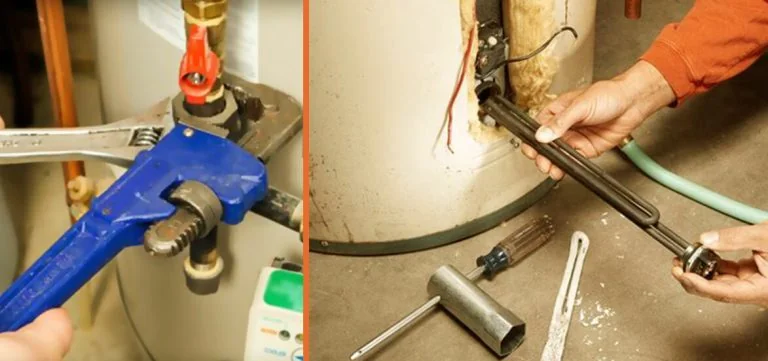
If you have an electric water heater and suddenly find yourself with lukewarm water (or no hot water at all), a failed heating element is the likely culprit. Electric heaters have two elements. If the lower element burns out, you will run out of hot water very quickly. If the upper element fails, you will have no hot water at all. Heating elements frequently burn out due to sediment encasing the element, causing it to overheat and snap.
4. A Faulty Thermostat
If your water is scalding hot or barely warm, the thermostat assembly may be failing. Gas water heaters rely on a gas control valve/thermostat assembly, while electric heaters have separate thermostats for each heating element. When these components degrade, they can fail to communicate the correct temperature to the heating mechanism, resulting in erratic water temperatures.
5. High Water Pressure and a Failed TPR Valve
Your municipal water supply should enter your home at around 50 to 60 PSI. If the pressure exceeds 80 PSI, it puts immense stress on the seams of your water heater tank. If the pressure builds too high, the TPR valve is supposed to open and release water. However, if the TPR valve is seized (often due to mineral buildup), the pressure inside the tank can cause it to rupture or, in extreme cases, explode. A leaking TPR valve is a clear sign that your system is under too much pressure or the valve itself has failed.
Frequently Asked Questions
How long should a standard water heater last?
A traditional tank water heater typically lasts between 8 and 12 years. Its lifespan depends heavily on the hardness of your local water and whether the unit has received annual maintenance, such as draining the sediment and replacing the anode rod.
Why is my water heater making a popping or rumbling noise?
Popping, rumbling, or knocking sounds are caused by severe sediment buildup at the bottom of the tank. As the burner heats the tank, water trapped beneath the heavy layer of sediment boils, creating steam bubbles that forcefully pop through the mineral crust.
Can a leaking water heater be repaired?
It depends on where the leak is located. If a supply pipe, the drain valve, or the TPR valve is leaking, those components can easily be replaced. However, if the steel tank itself is leaking due to internal corrosion, it cannot be patched or repaired. The entire water heater must be replaced.
How can I prevent my water heater from failing early?
The two most important maintenance tasks are draining/flushing the tank annually to remove sediment buildup, and having a plumber inspect (and replace if necessary) the sacrificial anode rod every 3 to 4 years.
Should I repair my old water heater or replace it?
The general rule of thumb is the "50% rule." If your water heater is more than halfway through its expected lifespan (e.g., over 6 years old) and the repair will cost more than 50% of the price of a new unit, it is more cost-effective to replace it. A full replacement is also mandatory if the tank itself is leaking.
Conclusion
A water heater failure is rarely an isolated incident; it is usually the result of years of hidden wear and tear, mineral buildup, or corrosion. By understanding the common causes of failure—and listening for warning signs like rumbling noises or fluctuating temperatures—you can address problems before they result in a flooded garage or a cold shower.
Fast, Reliable Water Heater Services by EZ Leak Detection
If your water heater is leaking, making strange noises, or failing to produce hot water, don't wait for a complete breakdown. The licensed professionals at EZ Leak Detection provide expert water heater repairs, maintenance, and full replacements across San Diego, Carlsbad, Oceanside, and Orange County.
Contact EZ Leak Detection today for prompt, professional service to restore your hot water.
- Call us directly: (760) 392-7616
- Find a water heater expert near me on Google Maps
- Learn more about our services at EZ Leak Detection
TESTIMONIALS