
Maintaining a home in Southern California comes with its fair share of challenges, but few are as destructive—or as sneaky—as a hidden water leak. Water leaks do more than just inflate your monthly utility bills; if left unchecked, they can compromise the structural integrity of your home, warp your flooring, and create the perfect environment for toxic black mold to thrive.
The problem is that most leaks don't happen out in the open. They occur behind drywall, underneath concrete slab foundations, or deep within crawlspaces. Fortunately, you don't need x-ray vision to find them. As the leading leak detection experts serving San Diego, Orange County, and Riverside, the technicians at EZ Leak Detection use advanced technology to pinpoint leaks every day. But before we arrive, there are several simple, highly effective ways you can detect a hidden water leak in your home.
4 Expert Ways to Detect a Hidden Water Leak
If you suspect a leak but can't see water, don't panic. Follow this diagnostic framework to identify the warning signs before a minor drip becomes a major disaster.
1. Perform the Water Meter Test
This is the most definitive way to confirm you have an active leak in your pressurized supply lines.
- First, ensure absolutely no water is being used inside or outside your home. Turn off all faucets, make sure the washing machine and dishwasher are off, and don't flush any toilets.
- Locate your water meter (usually near the street under a concrete or metal lid).
- Look for the Low-Flow Indicator. This is typically a small triangle, star, or gear-shaped dial on the face of the meter.
- If that indicator is spinning or moving while all water is shut off, you have a leak.
- To determine if the leak is inside or outside, shut off the main water valve to your house and check the meter again. If the meter stops, the leak is inside. If it keeps spinning, the leak is in the underground service line between the meter and your home.
2. Monitor for Unexplained Spikes in Your Water Bill
If you don't want to check the meter manually, your monthly bill will often tell the story. If your household habits haven't changed—you haven't filled a swimming pool or had house guests—but your bill has spiked significantly, a hidden leak is the most likely culprit. Compare your current usage to the same billing period from the previous year. A sudden, drastic increase requires immediate investigation.
3. Trust Your Nose: The Musty Odor Test
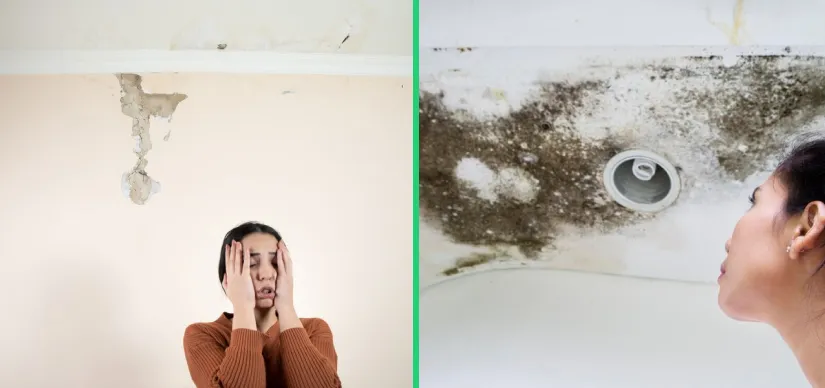
Water leaks inside walls or under floors create dark, damp environments. It takes less than 48 hours for mold and mildew to begin growing in these conditions. If you walk into a bathroom, laundry room, or basement and consistently smell a damp, earthy, or musty odor, moisture is trapped somewhere. Don't ignore this smell—it is often the very first sign of a hidden pinhole leak or a slow drip behind the drywall.
4. Look for Physical Symptoms of Moisture Retention
When water escapes a pipe, it has to go somewhere. It will wick into the surrounding building materials. Keep an eye out for these physical signs:
- Bubbling or peeling paint: Water traveling through drywall will push the paint outward.
- Discolored patches: Look for yellow or brown water stains on the ceiling or walls.
- Warped baseboards or flooring: Hardwood will cup or crown, and laminate will warp if water is pooling beneath it.
- Hot spots on the floor: An unusually warm patch of flooring—especially on a concrete slab—strongly indicates a leak in a hot water line running beneath the foundation.
Frequently Asked Questions
Q. Should I try to find a leak behind a wall by cutting a hole?
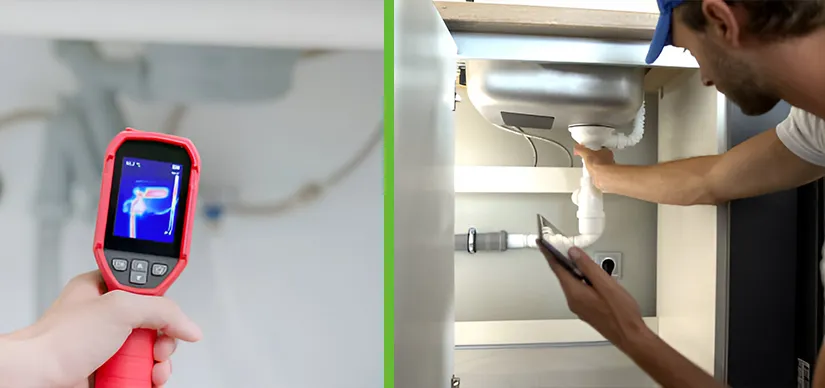
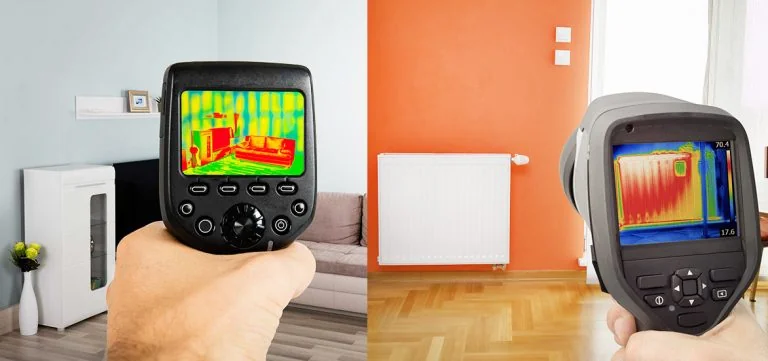
Ans. No. Tearing down drywall on a hunch is messy, expensive, and often ineffective. Professional leak detection companies use non-invasive technology like thermal imaging and acoustic sensors to "see" and "hear" through the walls, pinpointing the leak precisely before any cutting begins.
Q. Can a toilet cause a high water bill even if I don't see a leak?
Ans. Yes, the "silent toilet leak" is a massive water waster. If the flapper valve at the bottom of the tank degrades, water will continuously flow from the tank into the bowl and down the drain without you ever seeing it spill on the floor. Test it by putting a few drops of food coloring in the tank. If the color appears in the bowl 15 minutes later without flushing, you have a leak.
Q. What should I do immediately if I find a major leak?
Ans. Shut off the main water valve to your home immediately to stop the flow of water and prevent further damage. Then, call a professional leak detection and repair service.
Why Professional Leak Detection is the Best Option
While the methods above will tell you that a leak exists, they won't always tell you exactly where it is. Water is tricky—it will travel along the path of least resistance. The water stain on your living room ceiling might actually be coming from a leaky shower valve 15 feet away.
This is where the professionals come in. If you are located in San Diego, Orange County, or Los Angeles County, EZ Leak Detection is your premier choice. We utilize state-of-the-art electronic acoustic listening devices, thermal imaging cameras, and tracer gas systems to locate the exact source of the leak without unnecessary destruction to your property.
Don't let a hidden leak compromise the health of your home or your family. If you suspect water leakage, act fast. Call EZ Leak Detection today at (760) 392-7616 for rapid, accurate, and non-invasive leak detection services.
Author: ezleakdev
TESTIMONIALS