
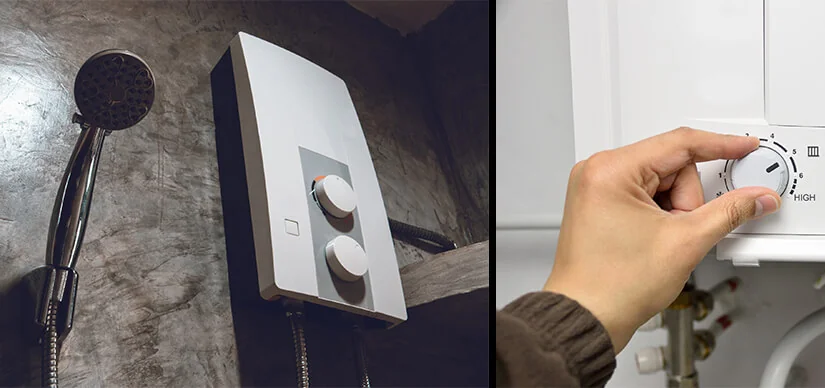
For decades, the standard 50-gallon storage-tank water heater was a staple in American homes. Today, however, tankless water heaters (also known as on-demand water heaters) have rapidly become the standard for modern plumbing upgrades. While the initial tankless water heater installation in Riverside and surrounding areas requires a larger upfront investment, the long-term benefits in efficiency, space-saving, and comfort are unparalleled.
At EZ Leak Detection, our licensed technicians install, repair, and maintain tankless systems for homeowners across Southern California. If you are on the fence about upgrading from your old, rusty storage tank, here is a detailed breakdown of how tankless systems work, and the top five reasons why going tankless is the smartest choice for your home.
How a Tankless Water Heater Works
Traditional water heaters store 40 to 80 gallons of water, keeping it heated 24/7 so it is ready when you turn on the tap. This constant heating and reheating is called "standby heat loss," and it wastes a tremendous amount of energy.
Tankless or on-demand water heaters eliminate this waste entirely. They do not store any water. Instead, when you turn on a hot water faucet, cold water travels through a pipe into the unit. A flow sensor detects the water movement and ignites a powerful gas burner or electric heating element. The water is rapidly heated as it passes through a copper or stainless steel heat exchanger, delivering hot water directly to your fixture. When you turn the tap off, the heater shuts down instantly.
Gas vs. Electric Tankless Systems
Tankless heaters are powered by either electricity or gas (natural gas or propane). Gas models are generally preferred for whole-home applications in Southern California. They provide higher flow rates and cost significantly less to operate due to the lower cost of natural gas compared to electricity. Electric models are highly efficient but are often better suited as "point-of-use" heaters for single sinks or in areas where gas lines are unavailable.
5 Reasons to Switch to a Tankless Water Heater
1. An Endless Supply of Hot Water
If you have ever been the last person in your family to take a shower in the morning, you know the shock of a storage tank running out of hot water. Because tankless systems heat water on demand, the hot water literally never runs out. As long as you have municipal water and a gas/electrical supply, you can run the shower, the dishwasher, and the washing machine simultaneously without anyone getting a cold surprise.
2. Significant Space Savings
Traditional 50-gallon water heaters are massive, bulky cylinders that take up valuable square footage in your garage, basement, or utility closet. Tankless units are incredibly compact—roughly the size of a carry-on suitcase (about two feet tall and a foot wide). They are mounted directly to the wall, freeing up significant floor space for storage or other uses.
3. Lower Monthly Energy Bills
By eliminating standby heat loss, tankless water heaters are significantly more energy-efficient than their storage tank counterparts. According to the U.S. Department of Energy, homes that use 41 gallons or less of hot water daily can be 24% to 34% more energy-efficient with a tankless heater. This translates directly to lower monthly gas or electric bills, helping to offset the initial installation cost over the unit's lifespan.
4. Double the Lifespan
A standard tank water heater is constantly exposed to water and minerals, leading to internal rusting and a typical lifespan of just 8 to 12 years. Because tankless units do not store water, they suffer far less from corrosion and sediment buildup. With annual maintenance (primarily descaling the heat exchanger), a high-quality tankless water heater can easily last 20 to 25 years.
5. Reduced Risk of Catastrophic Flooding
One of the biggest dangers of a traditional indoor water heater is the risk of the tank bursting. A rusted-out 50-gallon tank can suddenly dump its entire contents into your garage or home, causing massive water damage and requiring expensive remediation. Because tankless models do not hold a large volume of water, the risk of catastrophic flooding is virtually eliminated.
Frequently Asked Questions
Are tankless water heaters more expensive to install?
Yes. The initial unit cost is higher, and retrofitting a home for a tankless system often requires upgrading the gas line size (to handle the higher BTU demand) and installing specialized stainless steel venting. However, the energy savings and doubled lifespan make it a better long-term financial investment.
Do tankless water heaters require maintenance?
Absolutely. The most critical maintenance for a tankless water heater—especially in Southern California areas with hard water—is an annual descaling flush. This involves pumping a vinegar or specialized descaling solution through the unit for 45-60 minutes to dissolve mineral buildup on the heat exchanger.
Is "endless" hot water the same as "instant" hot water?
No. Tankless heaters provide an endless supply of hot water, but it still takes time for that water to travel from the unit to your faucet. If you want truly instant hot water the second you turn the tap, you need a tankless unit that includes a built-in recirculation pump.
What size tankless water heater do I need for my home?
Tankless heaters are sized by their flow rate (Gallons Per Minute or GPM), not by gallon capacity. A plumber must calculate your peak demand—for example, if you want to run two showers (2.5 GPM each) and a kitchen sink (1.5 GPM) simultaneously, you would need a unit capable of delivering at least 6.5 GPM at the required temperature rise.
Will a tankless water heater work during a power outage?
Even gas-powered tankless water heaters require a small amount of electricity to power the digital display, the flow sensor, and the electronic ignition. If the power goes out, the unit will not ignite. However, you can easily connect the unit to a small battery backup (UPS) to ensure you have hot water during outages.
Conclusion
If your old storage-tank water heater is showing its age, upgrading to a tankless system is an investment in your home's efficiency and your family's comfort. With an endless supply of hot water, lower utility bills, and a lifespan that far exceeds traditional models, tankless water heaters truly are the way to go.
Expert Tankless Installation by EZ Leak Detection
Transitioning to a tankless system requires professional expertise to ensure proper gas line sizing, safe venting, and optimal placement. The licensed plumbers at EZ Leak Detection have extensive experience installing and maintaining tankless systems throughout Riverside, San Diego, and Orange County.
Ready to upgrade your home's hot water system? Contact EZ Leak Detection today for a consultation and estimate.
- Call us directly: (760) 392-7616
- Find a plumbing specialist near me on Google Maps
- Learn more about our services at EZ Leak Detection
Tags
- Tankless water heater installation Riverside
- Tankless water heater repair Riverside
- water heater leak from bottom
- water heater leak repair
TESTIMONIALS